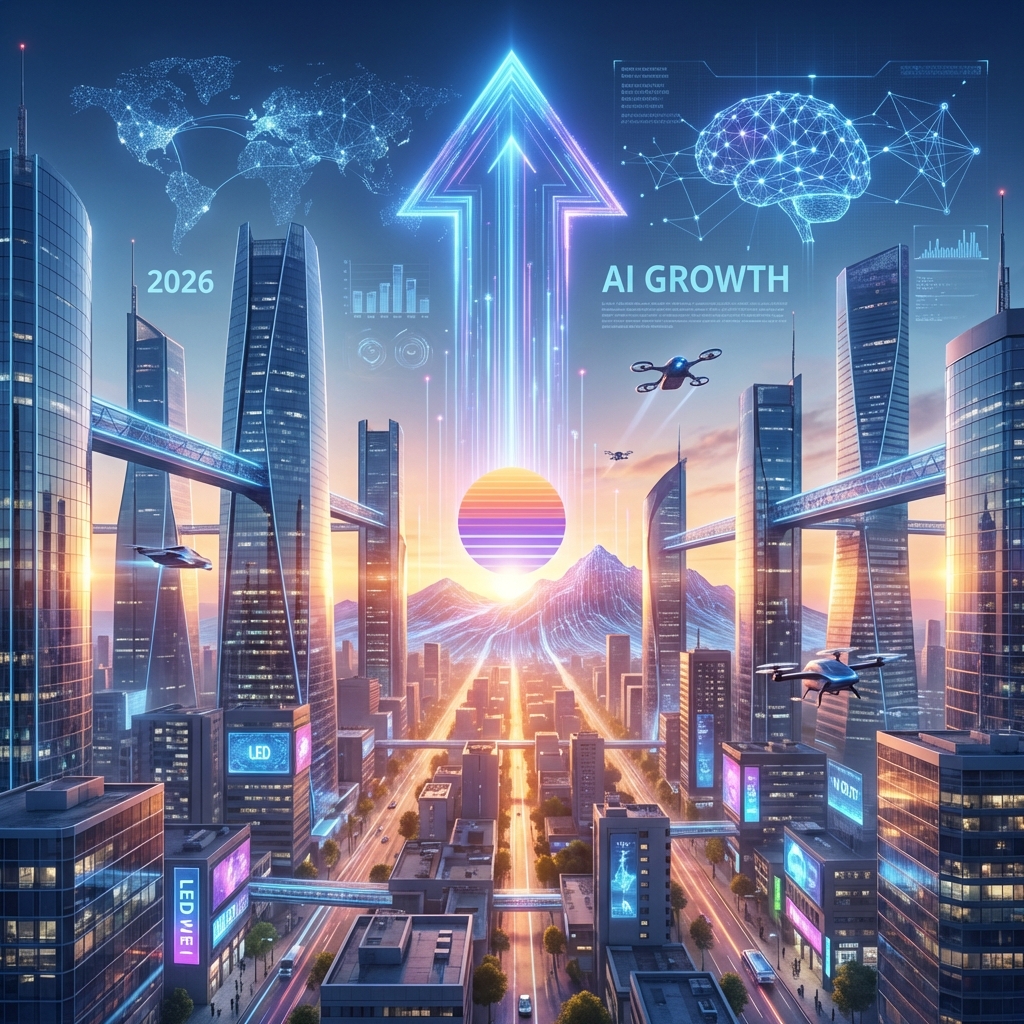
We have crossed the threshold from experimental AI to operational necessity. 2026 marks the era of "Agentic Intelligence"—where models no longer just generate text, but execute complex, multi-step workflows autonomously. For enterprise leaders, the question is now one of integration depth, not adoption feasibility.
From Chatbots to Action Models
The paradigm of conversational AI is shifting. While Large Language Models (LLMs) excelled at synthesis, Large Action Models (LAMs) are defining 2026. These systems interact directly with software interfaces, APIs, and databases to perform tasks previously requiring human intervention. We represent a move from "ask and answer" to "command and control."
Organizations deploying LAMs are seeing a 60% reduction in middleware overhead. Instead of building rigid API connectors, AI agents are trained to navigate existing software stacks, making integration faster and more resilient to UI changes.
The Commoditization of Intelligence
Intelligence is becoming a utility, much like electricity or cloud compute. The differentiating factor for businesses is no longer access to the best model, but the quality of their proprietary data infrastructure. Companies with structured, clean, and accessible data lakes are training bespoke models that outperform generalist giants like GPT-5 in specific vertical tasks.
"The moat is not the model. The moat is the propriety context you provide to the model."
Multimodal Native Workflows
Text-based prompting is becoming obsolete for creative professionals. The standard for 2026 is native multimodal interaction—speaking to an AI while showing it a video feed, or sketching a diagram that breaks down into code in real-time. This fluidity reduces the cognitive load of "prompt engineering" and returns focus to "intent direction."
For our partners, this means reduced cycle times in creative production. Concept art, storyboards, and rough cuts are generated in tandem, blurring the lines between pre-production and post-production.